
What the Actual Research Says About Content Warnings on Books
They feel like an obvious kindness — a heads-up before something difficult. But a growing body of psychological research keeps finding the same surprising result. Here's what the studies actually show, and why the debate is nowhere close to settled.
Published September 8, 2026
8 min read
Quote of the Day
"Despite most articles concluding trigger warnings are not helpful, they continue to be widely used by the public." — researchers Bridgland, Jones, and Bellet, on the strange gap between the evidence and the practice
A content warning at the front of a book feels like it should be an easy, obvious kindness — a brief heads-up before a reader encounters something genuinely difficult. It's also become one of the more quietly contested questions in psychology, with a growing body of research consistently landing somewhere far more complicated than "it helps" or "it doesn't matter." Understanding what the actual studies show — not the intuition, not the politics, the data itself — is worth doing before landing on either side of this debate.
These aren't new, and they didn't start where most people assume
The common assumption is that trigger warnings originated on feminist blogs sometime in the 2000s. A 2017 academic volume specifically dedicated to unpacking this history, Trigger Warnings: History, Theory and Context, pushes back on that origin story directly — tracing the underlying concept back through the study of "war neurosis" in soldiers of ancient Greece and Rome, arguing that the modern warning can't really be understood separately from the much longer history of how trauma and PTSD have been recognized and treated. The book's own editor, after soliciting essays from across multiple academic disciplines, concluded candidly that the material left readers with more open questions than settled answers — which turns out to be a fair preview of where the actual research still stands today.
What the largest, most rigorous study to date actually found
The most authoritative answer currently available comes from a 2023 meta-analysis — a study that combines and statistically re-examines all existing empirical research on the topic — conducted by researchers Victoria Bridgland, Payton Jones, and Benjamin Bellet, published in Clinical Psychological Science. Their conclusion, stated plainly: warnings had no measurable effect on people's emotional response to disturbing material, and no effect on educational outcomes either. The one effect that did show up consistently was an increase in anticipatory anxiety — meaning a warning reliably made people more anxious in the moments before encountering the content, without changing how they actually reacted to the content itself once they got there.
A related, frequently cited finding compounds this: multiple studies found that warnings can inadvertently reinforce the idea that a specific trauma is central to a person's identity — which runs directly counter to standard trauma-therapy goals, where treatment generally moves away from framing an experience as identity-defining, not toward reinforcing that framing.
The case for warnings still has real, serious defenders
None of this settles the debate as cleanly as it might first appear, and it would be inaccurate to present the research as uniformly one-sided. Advocates for content warnings, including scholars featured in Knox's own volume, frame them as a legitimate, human-rights-oriented accommodation for people who've experienced real trauma — not a tool for avoidance, but a way of helping someone prepare to engage with difficult material rather than being blindsided by it, which is a meaningfully different goal than simply avoiding it altogether. One contributor specifically argued that warnings are "necessary and helpful" precisely because they support engagement rather than retreat from difficult content.
There's also a fair, practical critique of some of the underlying studies themselves: several of the experiments finding "no benefit" have been criticized for not actually testing genuine trauma survivors, instead using general student or online-volunteer populations — a real methodological gap that makes it harder to conclude the research settles the question for the specific population warnings are most often intended to help.
A separate, more practical complaint that has nothing to do with psychology at all
Beyond the clinical debate, there's a distinct, much more down-to-earth objection that shows up repeatedly in discussions among writers and librarians specifically: warnings are often too reductive to actually represent a complex book. One librarian raised a pointed example — reducing a novel like Speak, which deals seriously and carefully with the aftermath of sexual assault, to a flat label like "Trigger Warning: Rape" arguably flattens a nuanced, carefully written work into something that sounds far more exploitative than the book actually is, potentially driving away exactly the readers who'd find real value in how the subject is actually handled.
Where this leaves an author or reader trying to make a practical decision
Given a body of research this genuinely mixed, the more useful question for most authors isn't "do the studies prove warnings work" — the honest answer is that they largely don't, for the general population studied so far, while remaining a live, unresolved question specifically for trauma survivors that the current research hasn't cleanly settled either. The more practical framing several writers land on instead is closer to reader trust and honesty than to psychological efficacy: readers, regardless of what the clinical data eventually settles, consistently report wanting accurate information about a book's content before committing to it, the same way they'd want an accurate genre label or an honest book description. One writer's own conclusion, after specifically encountering unlabeled graphic content in a book marketed as gentle Christian romance, was less about trigger-warning research and more about basic reader trust: authors have a real responsibility to categorize and describe their own books honestly, whatever specific labeling convention they choose to use.
Conclusion
The content-warning debate is one of the rarer cases in publishing where the science genuinely hasn't caught up to the strength of feeling on either side. The best current evidence suggests warnings don't do what most people assume — they don't reliably soften a reader's actual emotional reaction, and they may add a measurable amount of dread before the content even starts. But that same evidence doesn't cleanly resolve the separate, real question of what trauma survivors specifically need, nor does it touch the more basic, non-clinical case for simply describing a book honestly. Until better-targeted research closes those gaps, the most defensible position is also the least satisfying one: the data says less than either side of this argument currently assumes it does.
Share this article
Share this article with readers who'll want to read it.
You may also like
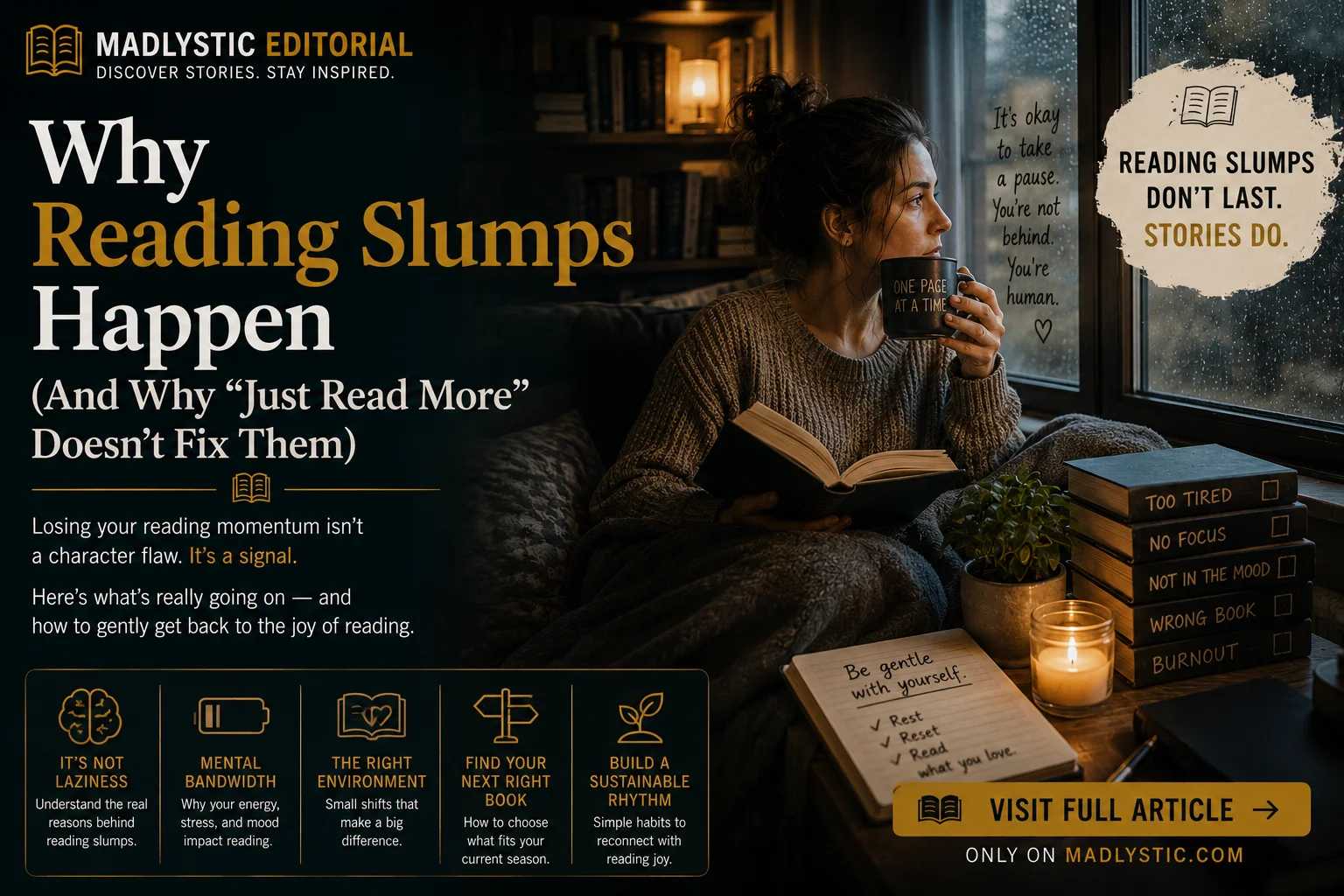
Why Reading Slumps Happen (And Why "Just Read More" Doesn't Fix Them)
July 23, 2026
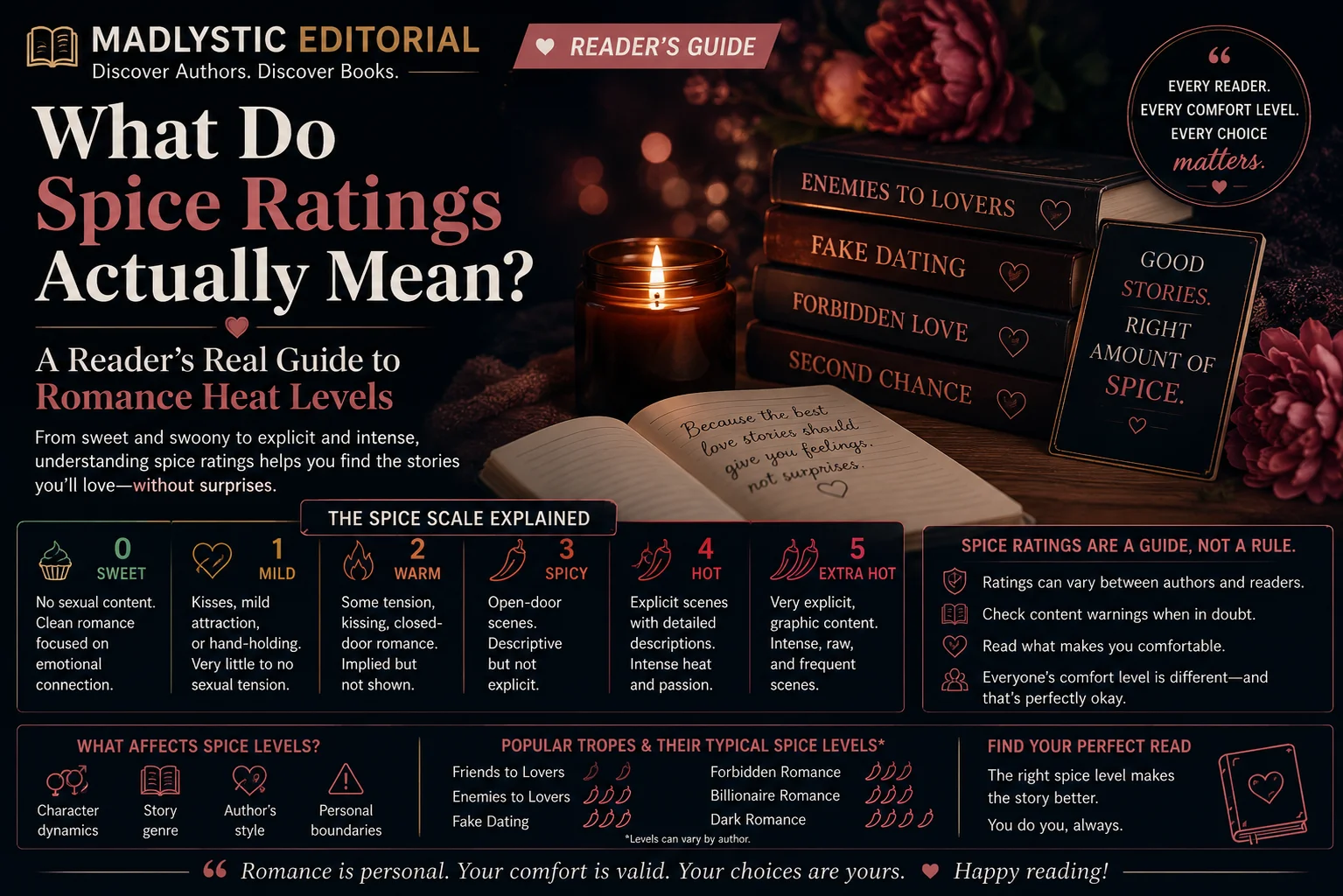
What Do Spice Ratings Actually Mean? A Reader's Real Guide to Romance Heat Levels
July 19, 2026

Goodreads Choice Awards 2026: Final Round Voting Dates
November 24, 2026

Traditional Publishing vs. Self-Publishing: Which Is Right for You?
November 24, 2026