
jerry-falade-book-deal-collapse-ai-suspicions
A 14-way auction, a $2 million deal, and a debut novel everyone called "stunningly good" — then it all fell apart. Here's what happened with Jerry Falade's Call Me, I'll Hide the Body, and why it's becoming a real flashpoint for publishing's AI anxiety.
Published August 6, 2026
4 min read
A debut crime novel that triggered one of publishing's most competitive recent bidding wars has collapsed entirely, after the author's own literary agency withdrew it from sale over unresolved questions about AI involvement in its writing.
Nigerian author Jerry Falade's manuscript, Call Me, I'll Hide the Body, drew bids from 14 U.S. publishing houses, with Macmillan's Minotaur imprint reportedly offering more than $2 million, while UK agent Sandy Hodgman secured multiple six-figure offers separately. Agent Marc Gerald of Europa Content, who first read the manuscript in June, described it as "stunningly good" and said it was a book that "appeals to absolutely everyone."
The deal unraveled after an editor raised concerns partway through the submissions process about possible AI involvement. According to Gerald, the agency chose not to run the manuscript through AI-detection software at the time, trusting Falade's assurance that no AI had been used. Following a meeting on July 29, where Gerald said "aspects of [Falade's] story changed," the agency withdrew the book entirely. In a statement to publishers, Falade's agents wrote that they were "no longer able to authenticate how the manuscript fully evolved from origin to completion," and could no longer substantiate his earlier reassurance.
Falade has strongly denied using AI to write the novel, telling The Guardian that AI-detection tools "are widely known to produce false positives" and noting the manuscript passed through multiple readers, editors, and acquisitions teams before the deal collapsed. He has also raised concerns about racial bias in the industry's response, stating that three Black authors received major publishing deals this year that were later cancelled or disrupted over AI suspicions, and writing on Instagram: "If you're a Person of Color and you secure a lucrative deal in history, someone, somewhere, will accuse you of using AI." Separately, he said he used an open-source AI model for unrelated research purposes during writing — specifically citing concern about his search history for a scene involving how to dispose of a body — but maintains this is distinct from using AI to generate the manuscript's actual text.
According to Futurism's reporting on Minotaur's decision, part of the publisher's caution reportedly centers on a more technical concern beyond authorship ethics alone: uncertainty over whether a manuscript containing AI-generated passages could have its copyright fully secured at all, given ongoing legal questions about AI and copyright law.
The American Association of Literary Agents told Publishers Weekly that responsibility for transparency about AI use falls on the author, and that an agent has the right to end the relationship when that transparency isn't maintained. Publishers Weekly noted the case is landing amid a broader wave of AI-authorship disputes across the industry, suggesting publishing may soon need to formalize clearer policies for handling these situations as they continue to arise.
Share this article
Share this with readers who'll want to know.
You may also like

The AI Detector That Cost a Novelist $2 Million Might Be Wrong 60% of the Time
August 7, 2026

Random House Pulls Zohran Mamdani Biography After Plagiarism Findings
September 3, 2026
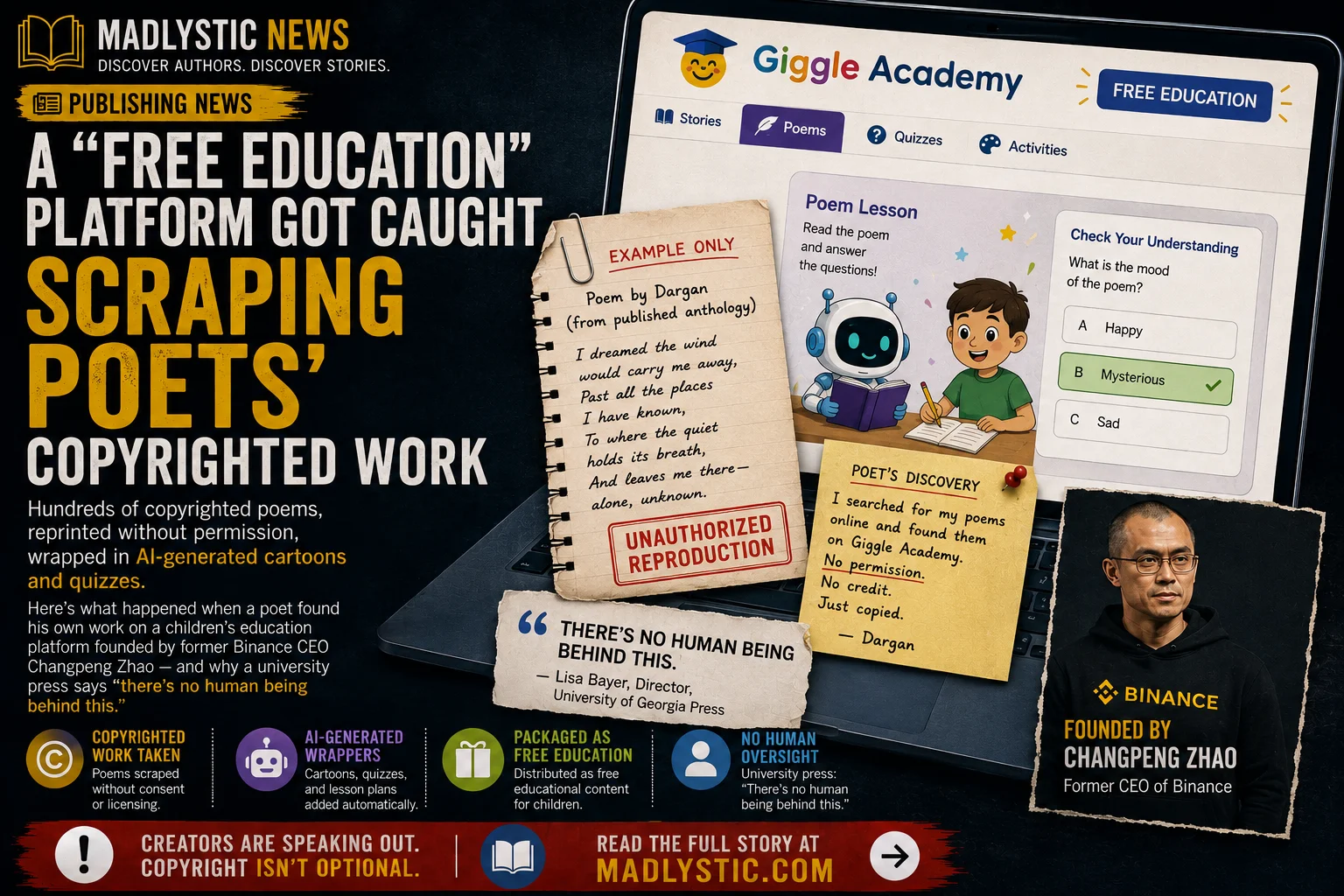
A "Free Education" Platform Got Caught Scraping Poets' Copyrighted Work
August 12, 2026

Jeff VanderMeer Is Ending the Southern Reach Series With Abdication
August 9, 2026