
Why Literary Agents Say They Hate Prologues (But Keep Signing Books That Have Them)
One agent estimates 90% of prologues should be cut. Game of Thrones and The Da Vinci Code both open with one anyway. Here's what's actually behind publishing's oldest structural debate — and how to tell if yours is the 90% or the 10%
Published August 12, 2026
8 min read
Quote of the Day
"A prologue is really just another name for Chapter 1. The same rules should apply — and really do." — commentary from the Nelson Literary Agency blog, on why prologues get judged more harshly than they should be
Sit in enough writing workshops or querying forums and you'll eventually hear some version of the same warning: agents hate prologues, cut yours before you submit. It's repeated so often it's practically folklore. And yet A Game of Thrones opens with one. So does The Da Vinci Code. So do a huge number of the exact bestsellers aspiring authors are told to study as models. The debate isn't actually as simple as "agents hate them" — it's a lot more specific, and understanding the actual distinction is more useful than either blindly following or blindly ignoring the rule.
Where the reputation actually comes from
The "agents hate prologues" folklore isn't invented out of nowhere — it comes from a very specific, repeated pattern in the slush pile. Author Dan Koboldt, writing candidly about years of querying and industry research, put a number on it: he's heard literary agents estimate that roughly 90% of prologues in submissions are genuinely unnecessary and should be cut. That's a striking figure, and it's worth taking seriously — but it's also, on close reading, a statement about execution, not about the device itself.
Editor Alyssa Matesic, who worked inside the publishing industry before moving into freelance editing, is direct about this: she says she never actually saw a universal ban on prologues during her time in the industry. If a prologue functioned as an effective entry point into the story, agents and editors had no issue with it. The actual complaint, repeated across nearly every source discussing this, isn't "prologues are bad" — it's "poorly executed prologues are bad," which is a very different, much narrower claim than the folklore version suggests.
What actually makes a prologue fail
The recurring, specific complaints are consistent enough across sources to treat as a genuine pattern rather than isolated pet peeves. The most common offender is the info dump — a prologue used as an excuse to unload backstory or world-building before a reader has any character to care about yet, overwhelming them with context they have no emotional anchor for. A second frequent failure is a prologue disconnected from the actual protagonist or main timeline — a scene that reads as interesting in isolation but never meaningfully connects back to the story that follows. A third is using a prologue purely to manufacture artificial stakes or shock value, promising a dramatic moment the rest of the book then takes too long to actually earn.
Literary agent Janet Reid summarized the underlying frustration plainly on her own blog: after reading through submission after submission of backstory-dump prologues, disconnected-scene prologues, and stakes-inflating prologues, it becomes genuinely understandable why so many agents developed a reflexive wariness toward the device — not because prologues are inherently flawed, but because so many submissions demonstrate the same specific, avoidable mistakes.
Why some genres get a pass and others don't
This is a detail that gets lost in the blanket "agents hate prologues" version of the advice: the tolerance for prologues varies significantly by genre, and pretending otherwise flattens a genuinely useful distinction. Editor Matesic identifies thrillers, mystery, suspense, and historical fiction as genres where prologues tend to work especially well — in a thriller or mystery specifically, a prologue teasing the central crime or conflict before shifting to the main character's ordinary world is a well-established, functional structure, not a lazy shortcut. Epic fantasy carries a similarly strong prologue tradition, though one editor noted candidly that they personally discourage the device with their own students specifically because it's so genre-saturated that it's become an easy crutch — often signaling, in their words, that the author simply started the story in the wrong place.
The real bestsellers doing this successfully
The Darling Axe's own craft analysis makes a point worth sitting with directly: a quick glance at any bestseller list reveals plenty of hugely successful novels built around genuinely effective prologues. A Game of Thrones uses its prologue to establish the White Walkers' threat and the story's tone of dread before ever introducing the Stark family — delivering atmosphere and stakes no later chapter could establish as efficiently. The Da Vinci Code opens with Jacques Saunière's murder, immediately establishing the mystery's central hook before the reader ever meets Robert Langdon. Neither prologue is an info dump, a disconnected vignette, or a cheap stakes-inflator — both are doing real structural work the rest of the book depends on.
The practical test worth actually applying
Several sources converge on roughly the same useful, concrete gut-check, even if none states it in exactly the same words: if a prologue could simply be relabeled "Chapter One" without losing anything, it isn't really a prologue at all — it's your actual opening chapter, and the label is doing unnecessary extra work. A genuine prologue typically differs from the rest of the book in some structural way that justifies the separate label — a different point of view, a different time period, a different narrator entirely — rather than simply being the first scene with a fancier name attached. If yours doesn't clear that bar, the advice converges: it's very likely one of the 90%.
Why this debate matters differently for querying authors versus self-published ones
There's a practical, structural reason the "cut your prologue" advice gets repeated so insistently to authors querying literary agents specifically: agents typically request only the first 10 pages alongside a query letter, and if a prologue eats into that sample, it's directly competing with the actual opening chapter for a narrow, high-stakes first impression. A weak prologue in that specific 10-page window can cost an author a request for the full manuscript before the actual story has even had a chance to make its case. That specific pressure doesn't apply the same way to a self-published author controlling their own book's full structure — which is part of why the "agents hate prologues" advice, while genuinely well-founded within the querying process, doesn't automatically generalize into a universal rule about whether a book should have one at all.
Conclusion
The honest version of this debate isn't "prologues are good" or "prologues are bad" — it's considerably narrower and more useful than either: a prologue earns its place exactly as much as any other chapter does, and the folklore around agents hating them reflects a real, statistically common pattern of weak execution, not a blanket rule against the device itself. A Game of Thrones and The Da Vinci Code didn't succeed despite their prologues — they succeeded partly because of them, precisely because both writers used the form to do something a first chapter genuinely couldn't have done as efficiently. The actual question worth asking isn't "should my book have a prologue." It's the much sharper one buried inside all of this advice: would this scene lose anything essential if I simply called it Chapter One instead? If the honest answer is no, the prologue isn't really earning its label.
Share this article
Share this article with readers who'll want to read it.
You may also like
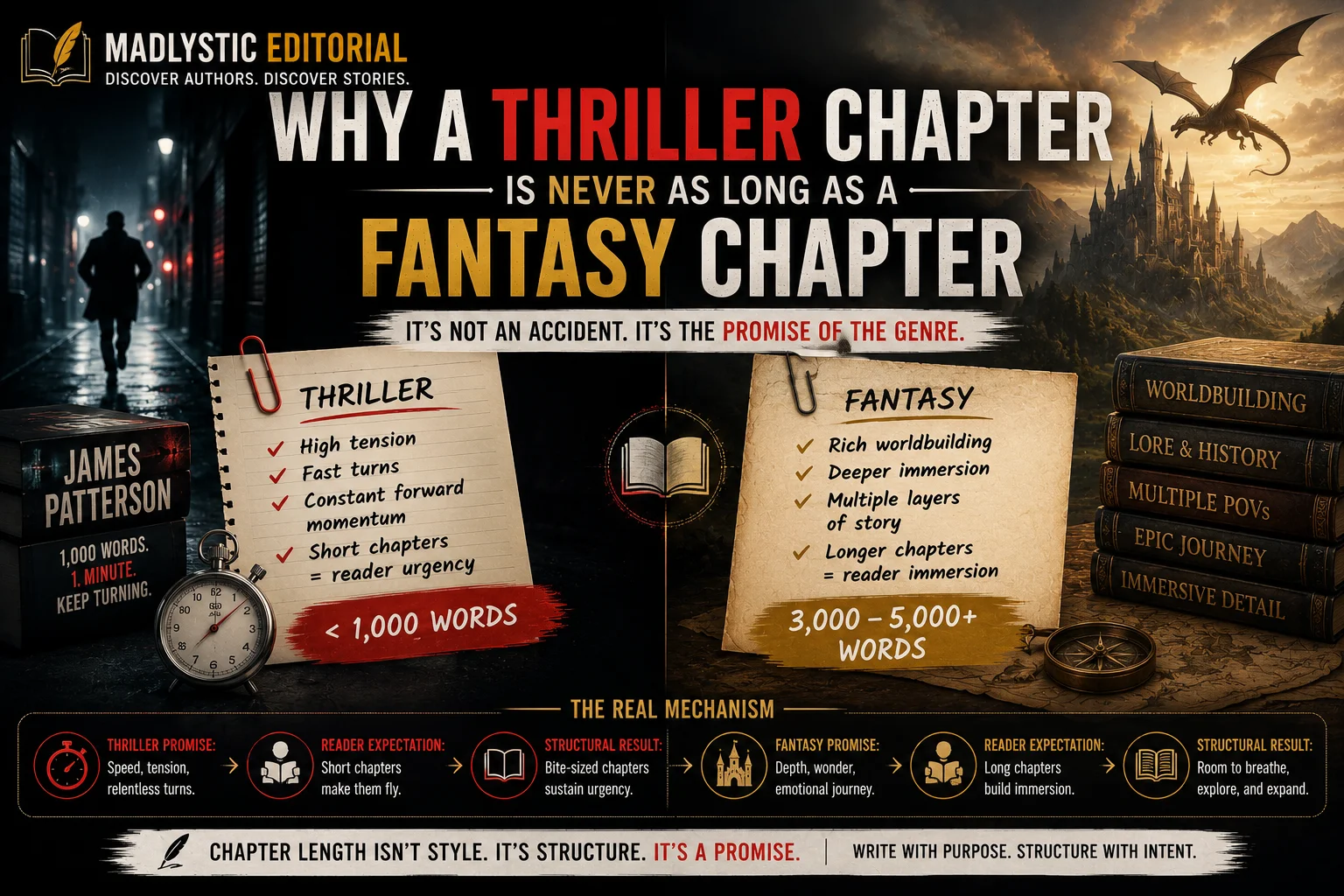
Why a Thriller Chapter Is Never as Long as a Fantasy Chapter
August 24, 2026
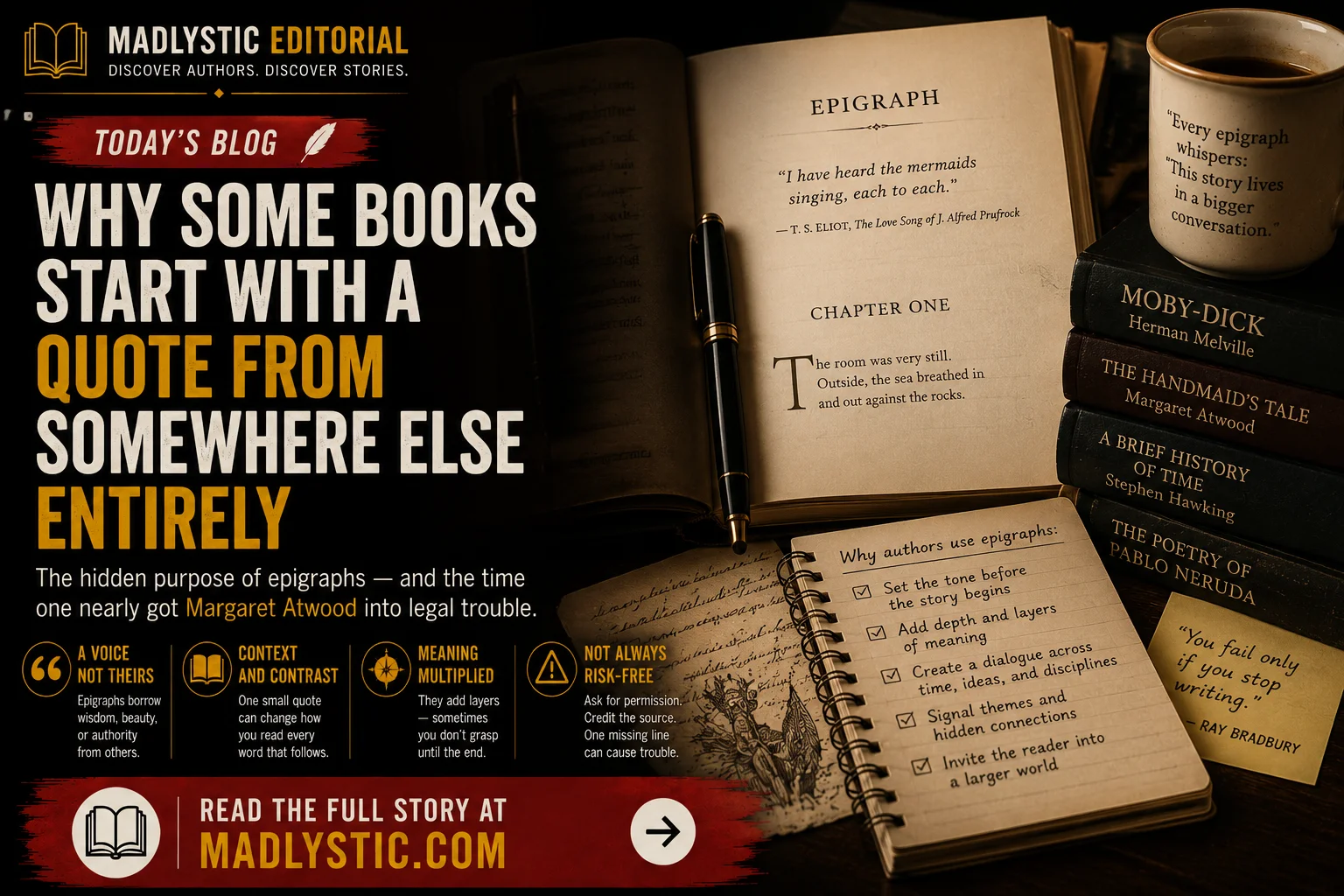
Why Some Books Start With a Quote From Somewhere Else Entirely
August 9, 2026
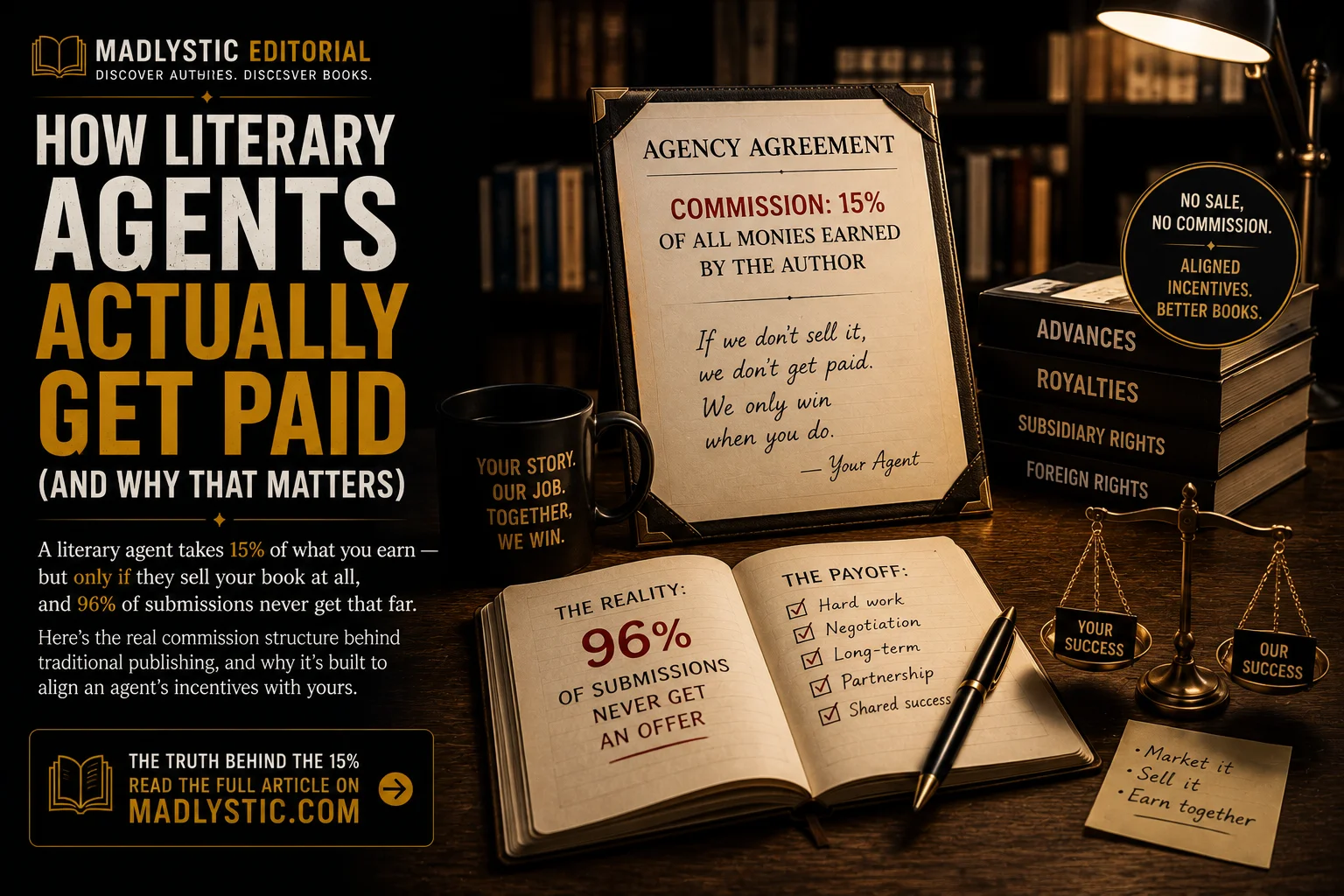
How Literary Agents Actually Get Paid (And Why That Matters)
August 3, 2026
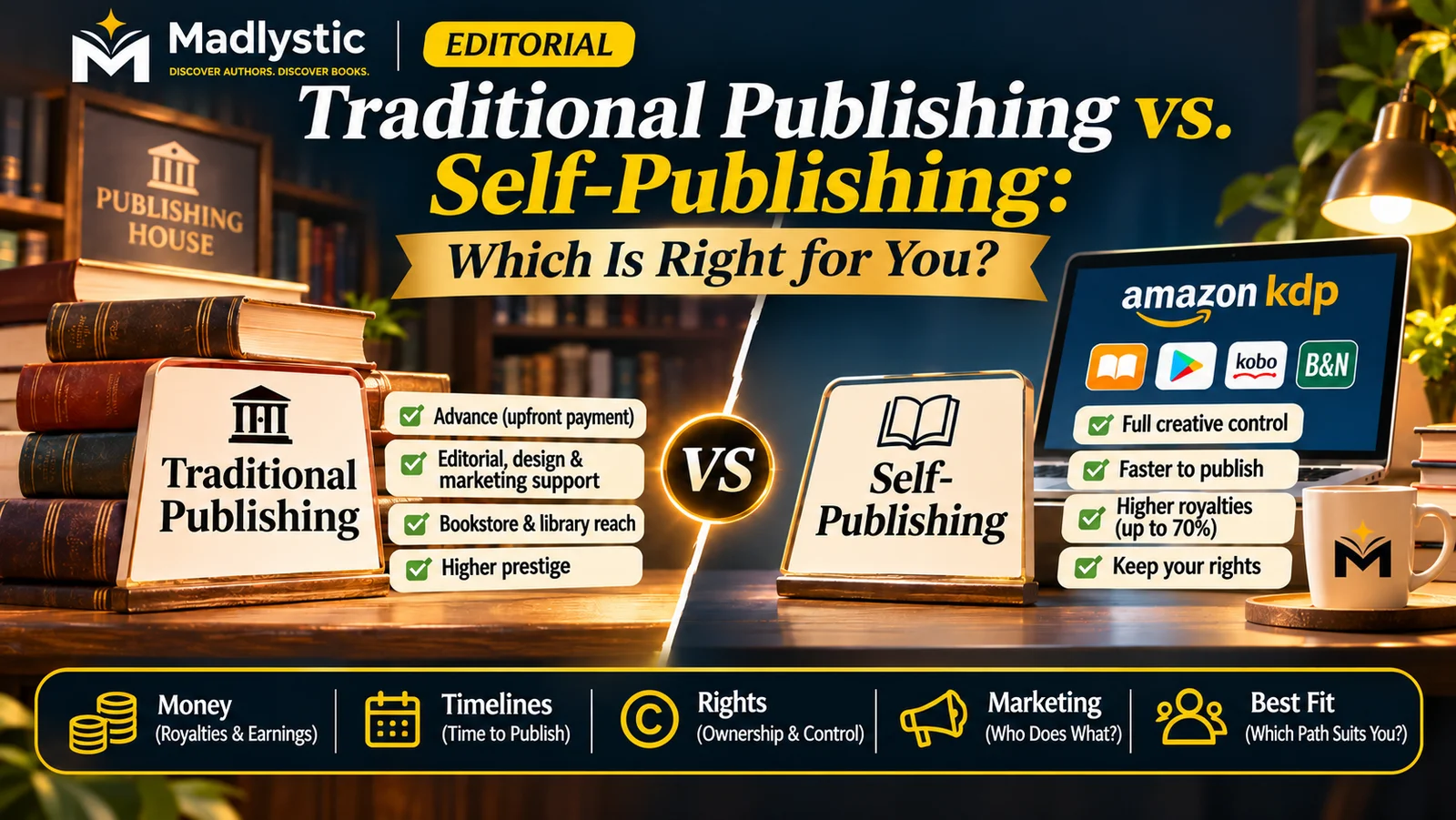
Traditional Publishing vs. Self-Publishing: Which Is Right for You?
November 24, 2026