
Book Dedications Used to Be a Matter of Survival
Before royalties existed, a bad dedication could mean an author didn't eat. Here's the surprisingly high-stakes history behind that short, often-skipped page at the front of every book — and why some of literature's most personal writing hides there.
Published September 3, 2026
7 min read
Quote of the Day
"You asked me once what I would remember. This, and much more." — a real book dedication, quietly doing more emotional work than most entire chapters
Most readers skip it entirely — a few lines, italicized, centered near the top of a blank page, gone before the actual story starts. But the dedication page has a genuinely strange history behind it, one where getting those few words right used to determine whether an author could afford to eat, and where, even today, some of literature's rawest, most unguarded writing hides in plain sight, precisely because readers assume there's nothing worth reading there.
When a dedication was a matter of literal survival
Before the modern royalty system existed, authors didn't make money from book sales at all — they survived on patronage, meaning a wealthy duke, bishop, or emperor bankrolled the work in exchange for public credit and flattery. The dedication page was where that transaction actually happened, in writing, and the stakes were genuinely serious. Astronomer Johannes Kepler had to dedicate his Astronomia Nova — one of the foundational texts of modern astronomy — to Holy Roman Emperor Rudolph II, framing his own scientific breakthroughs as a reflection of the Emperor's wisdom rather than his own insight. If the Emperor was pleased, funding continued. If not, Kepler was back to writing horoscopes for money. Dedicatory letters from this era could run for pages, weaving in praise, current events, and elaborate justifications for the work — a far cry from the two-line dedications common today.
The practice occasionally curdled into outright fraud. One account from 1910 describes an author who published a multi-volume work and dedicated each volume to a different patron, collecting payment from each one before anyone compared notes and realized the scheme. The author of that account concluded flatly that dedications, in this era, "were too often for sale."
A dedication could also be armor
In eras where writing something politically or religiously bold could get an author genuinely killed, a dedication served a second, more defensive function. Saint Augustine structured his entire Confessions as a prayer directly addressed to God — a dedication so total it becomes the book's whole framing device — which had the practical effect of making the work nearly impossible to criticize without appearing to criticize God directly. Cervantes played a subtler version of the same game, dedicating Don Quixote, a book that quietly mocked the old chivalric order, to a nobleman who represented exactly that order — following the rules on the surface while doing something considerably more subversive underneath.
The shift from survival to sentiment
As the patronage system faded and authors began earning directly from book sales, the entire purpose of a dedication shifted from strategic necessity to genuine personal expression. Today, dedications generally fall into a few recognizable categories: commemorative dedications, simple and direct ("For my daughters, Machala and Cheryl"); tongue-in-cheek dedications, playful or built around an inside joke; and tribute dedications honoring mentors, admired authors, or even the specific research and thinkers a nonfiction work builds on. Some authors use more than one — Nobel laureate José Saramago's Blindness carries two separate dedications, and romance author Brittany Ziegler has spoken about splitting her own dedications between her daughters and a specific fan who found her work through an Amazon ad and became a genuine friend.
Where the real emotional weight tends to hide
Because readers so reliably skip this page, it's become one of the few places in a book where an author's guard visibly drops. Alice Walker's dedication in The Color Purple reads like a short poem in its own right. Cheryl Strayed's dedication in Tiny Beautiful Things carries the same emotional register as her advice column itself. Gloria Steinem used the dedication of her memoir My Life on the Road to publicly thank a specific doctor who performed an illegal abortion for her in 1957, a decade before it was legal in England — a piece of genuinely significant personal and political history, tucked into a page most readers never read closely.
Author Daniel Handler, writing as Lemony Snicket, built an entire recurring device out of this expectation: each book in A Series of Unfortunate Events carries a dedication to "Beatrice," a deceased love, growing more heartbreaking book by book — until a reader eventually realizes Beatrice, like Lemony Snicket himself, is entirely fictional, and the whole running dedication is itself part of the story's construction.
And sometimes, a dedication is simply a joke aimed at the world
Not every dedication is sincere, and some of the funniest ones are deliberately not. E.E. Cummings dedicated his 1935 poetry collection No Thanks to the fourteen publishers who had rejected it — listing their names directly, arranged to form the shape of a funeral urn on the page. Thriller author Nelson DeMille used his dedication in Wild Fire to mock a trend he'd noticed among other authors: thanking a long list of famous people for vague, often nonexistent "inspiration" purely to make themselves look more impressive by association.
Conclusion
A dedication page asks for almost nothing of a reader's time and gets skipped constantly as a result — which is precisely what makes it such an unusually honest corner of a book. It's outlived its original, high-stakes purpose entirely: nobody today writes one to keep a roof over their head. What's left, once the patronage system fell away, is something closer to its opposite — one of the only places in an entire published work where an author writes exclusively for an audience of one, fully aware that almost everyone else will simply turn the page.
Share this article
Share this article with readers who'll want to read it.
You may also like
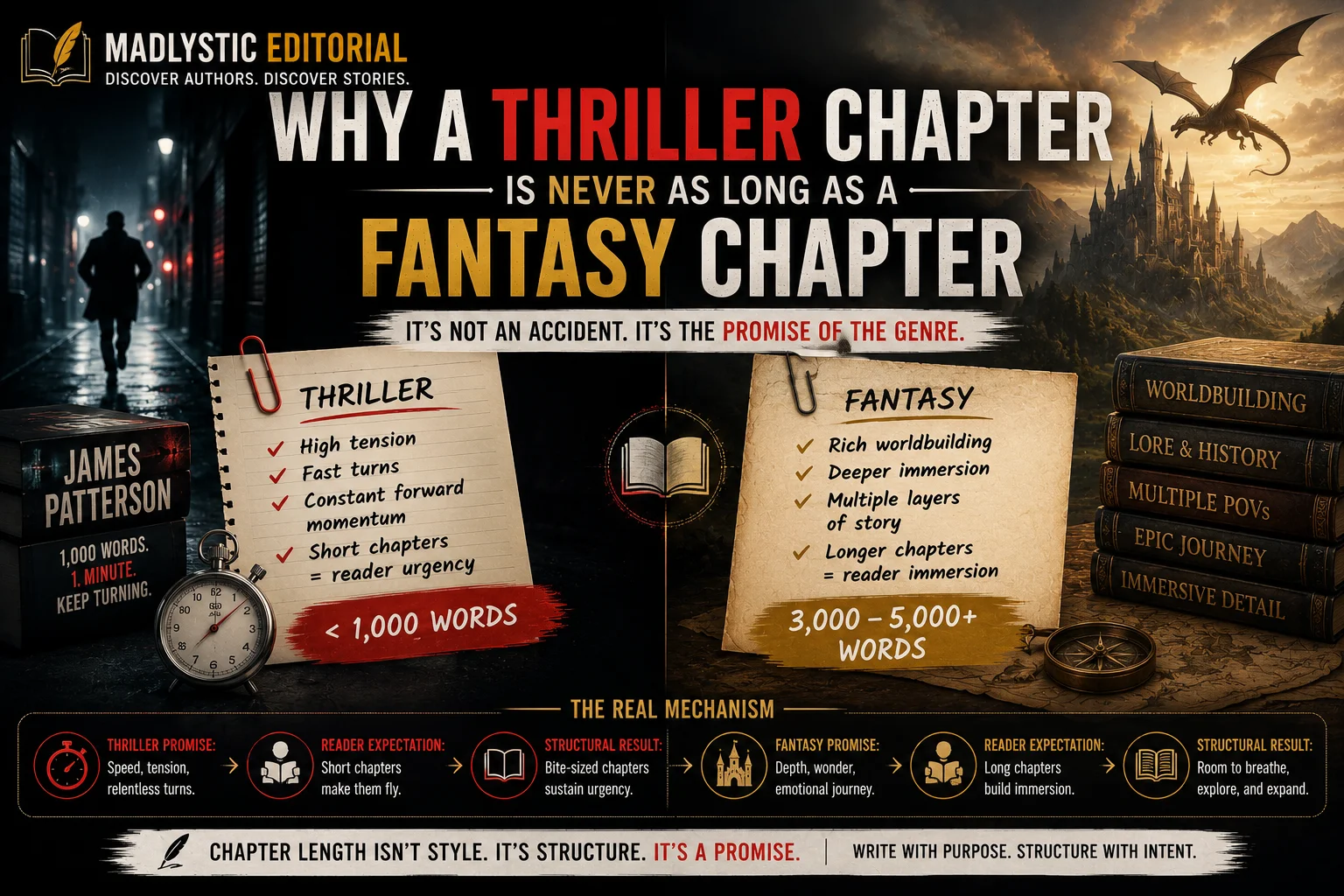
Why a Thriller Chapter Is Never as Long as a Fantasy Chapter
August 24, 2026

The Narrator Was Lying to You the Whole Time — On Purpose
August 12, 2026

Why Literary Agents Say They Hate Prologues (But Keep Signing Books That Have Them)
August 12, 2026
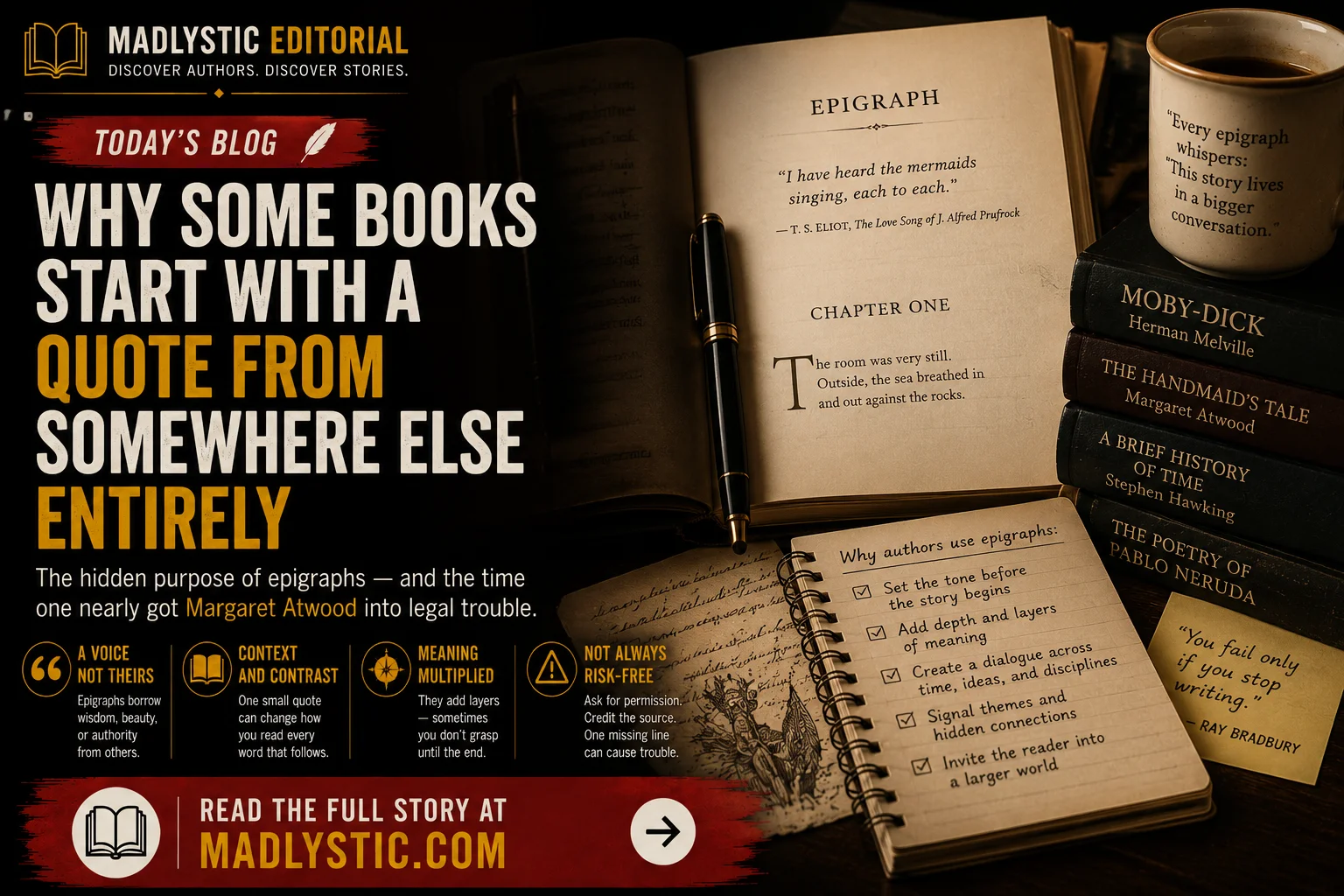
Why Some Books Start With a Quote From Somewhere Else Entirely
August 9, 2026