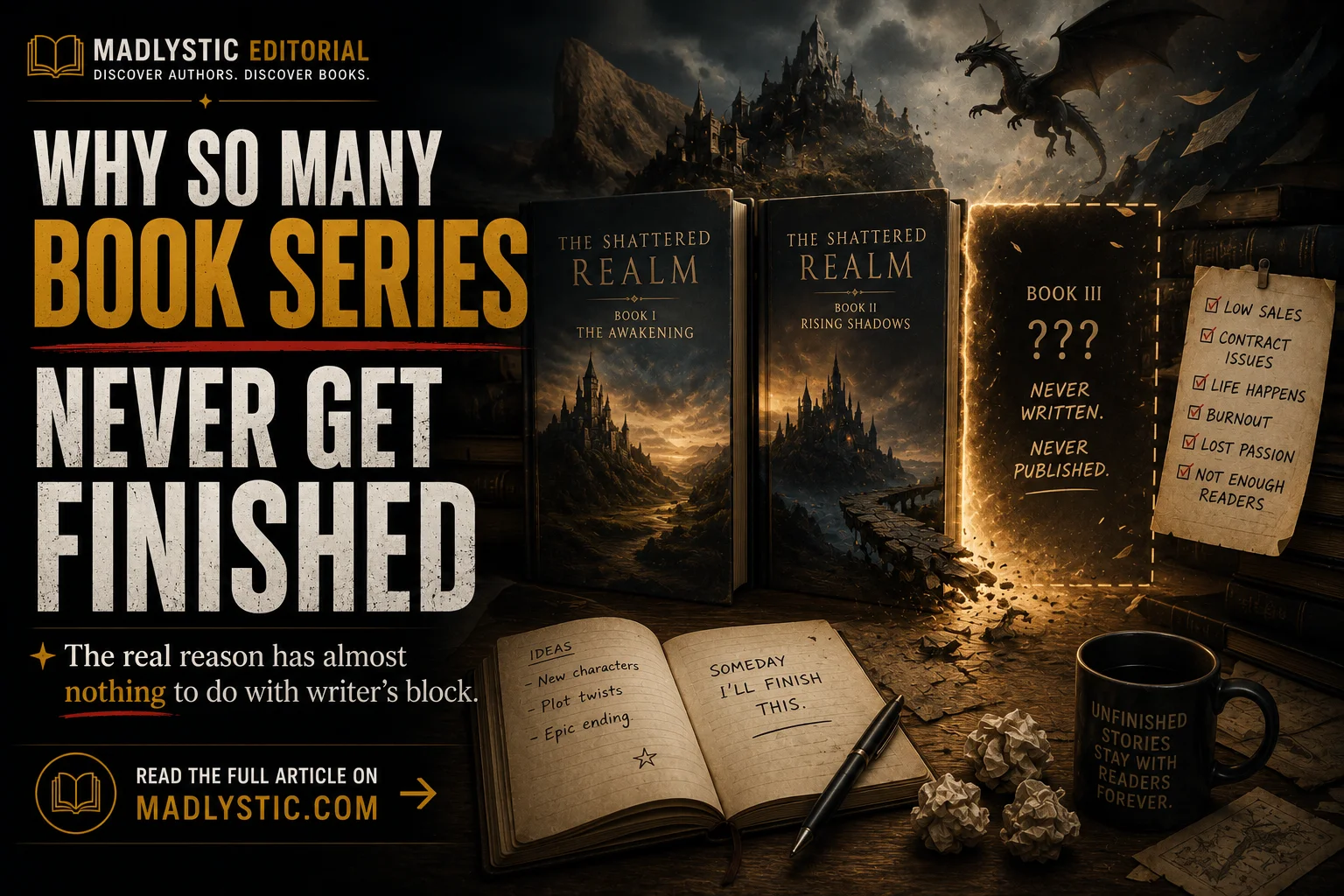
Why So Many Book Series Never Get Finished
That trilogy that stopped at book two. That series that ended on an unresolved cliffhanger. Here's the real mechanism behind abandoned book series, straight from authors who lived through it — and the one thing that actually changes the outcome.
Published July 30, 2026
9 min read
Quote of the Day
"A book series has to sell well to justify its existence in a working author's schedule." — an author's own plain summary of the mechanism behind nearly every abandoned series
Every dedicated reader has at least one: a trilogy that mysteriously stopped at book two, a series that ended on a genuine cliffhanger with no resolution ever arriving, an author who simply went quiet mid-story with no announcement, no closure, nothing. It feels personal, almost like betrayal — an author abandoning characters you'd invested real time and emotion in. The actual mechanism behind it is rarely personal at all, and hearing it explained directly by authors who've lived through exactly this makes the whole pattern suddenly, uncomfortably clear.
The blunt, one-sentence version, from an author who's said it plainly
Buried in an author FAQ addressing exactly this question, one writer laid out the entire mechanism as directly as it's ever been stated: a book series has to sell well enough to justify its place in a working author's schedule, and if the sales aren't there, the series gets discontinued — full stop, no matter how much unfinished story the author is still carrying around in their head. It's not about creative burnout, losing interest in the characters, or running out of ideas. It's almost always, simply, a sales threshold that wasn't cleared.
How this actually plays out inside a publishing contract
The mechanism becomes even clearer once you understand how these deals are typically structured. Author Kate Elliott has spoken publicly about her own experience with this exact situation: her fantasy trilogy's first book was published in 2015, and the publisher cancelled the remaining two books the following year — meaning that even if she'd turned in fully completed manuscripts, the publisher wouldn't have put them on sale. Making the situation genuinely painful rather than just disappointing, the publisher retained the rights to the story even after cancelling it, meaning Elliott couldn't simply take the finished books elsewhere and publish them independently. She described spending years, through her agency, attempting the slow, complicated process of getting those rights back — with no guarantee it would ever succeed, despite already knowing the entire story she wanted to tell.
This is the detail most readers never learn: cancellation and rights reversion are two completely separate battles. A publisher can decide a series isn't worth continuing while simultaneously holding onto the legal right to prevent anyone else, including the original author, from finishing and publishing it elsewhere.
Why "just self-publish the rest" isn't always the easy fix it sounds like
Some abandoned series do get a genuine second life. Author Shanna Swendson's series was cancelled by her original publisher after book four, one installment short of its planned ending — the result of a chain bookstore declining to order one of the later books, combined with the publishing imprint attempting to rebrand toward more "serious" titles. Years later, Swendson was eventually able to independently publish the remaining books herself, giving longtime readers the ending they'd been waiting for.
But that outcome depends entirely on whether an author can actually reclaim their rights — which, as Kate Elliott's situation shows, isn't guaranteed or fast. Author Roderick Gordon, whose six-book series ended without full closure, has been publicly candid that he still doesn't fully understand the exact reasoning behind his own cancellation, speculating it likely came down to insufficient combined sales across the roughly twenty international publishers who'd supported the series through its sixth installment — simply not enough, out of the more than forty who'd originally signed on for the first two books, to justify further investment.
The part readers almost never see: silence gets misread as disinterest
Here's the genuinely underappreciated mechanism buried in all of this, and it's worth naming plainly: publishers and authors are reading sales and review numbers, not private enthusiasm. One author, writing candidly about the pattern, put it bluntly: creative work regularly gets abandoned because "the readership wasn't there" — when in reality, the readership was simply quiet. Readers who genuinely love a series but never buy the individual installments promptly (waiting instead for a sale, a full box set, or simply not getting around to a timely purchase), and who never leave a review, are, from a publisher's or author's vantage point, functionally indistinguishable from readers who don't care about the series at all. The enthusiasm is real; the visible signal of that enthusiasm often isn't there in the specific ways a business decision actually gets made from.
Even outright piracy plays a quiet role in this pattern
This is a specific, less comfortable piece of the puzzle worth naming directly: readers pirating a series, or deliberately waiting until it's fully complete before purchasing anything at all, is a well-documented factor in why publishers pull the plug on ongoing series specifically. A publisher watching declining or flat sales across a series' later installments has no reliable way to distinguish "readers stopped caring" from "readers are reading it anyway, just not through a channel the publisher can measure" — and the business decision gets made on the only data actually visible to them.
What this means for readers who don't want their favorite series to end unfinished
None of this is really actionable advice in the sense of "here's a trick to fix it" — but understanding the mechanism does change what a reader can meaningfully do if they genuinely want an ongoing series to continue. Buying new installments promptly, rather than waiting for a sale or the series' eventual completion, sends a far clearer, more timely signal than the same purchase made months or years later. A genuine, specific review — not just a star rating, but a few honest sentences about why the book worked — is data that both publishers and authors have explicitly said they weigh directly in decisions about a series' future. And recommending a series directly to other readers functions as exactly the kind of word-of-mouth discovery signal that, as covered elsewhere on this blog, is often the actual mechanism by which a struggling series' fortunes turn around before a cancellation decision gets made at all.
Conclusion
An abandoned book series rarely reflects an author who stopped caring, or ran out of story, or simply moved on — the authors themselves, when they've spoken candidly about it, consistently describe the opposite: full outlines still in a drawer, endings they know completely, characters they haven't stopped thinking about years later. What actually happened, almost every time this pattern repeats, is a sales threshold quietly not being cleared, filtered through a publishing contract that often locks the story away from the very person who wrote it. Understanding that mechanism doesn't guarantee any specific series gets finished. But it does reframe the whole experience: the silence readers feel from an abandoned series usually isn't the author's silence at all — it's the business's, responding to a silence readers themselves, without realizing it, were the first to create.
Share this article
Share this article with readers who'll want to read it.
You may also like
How the New York Times Bestseller List Really Works
November 9, 2026
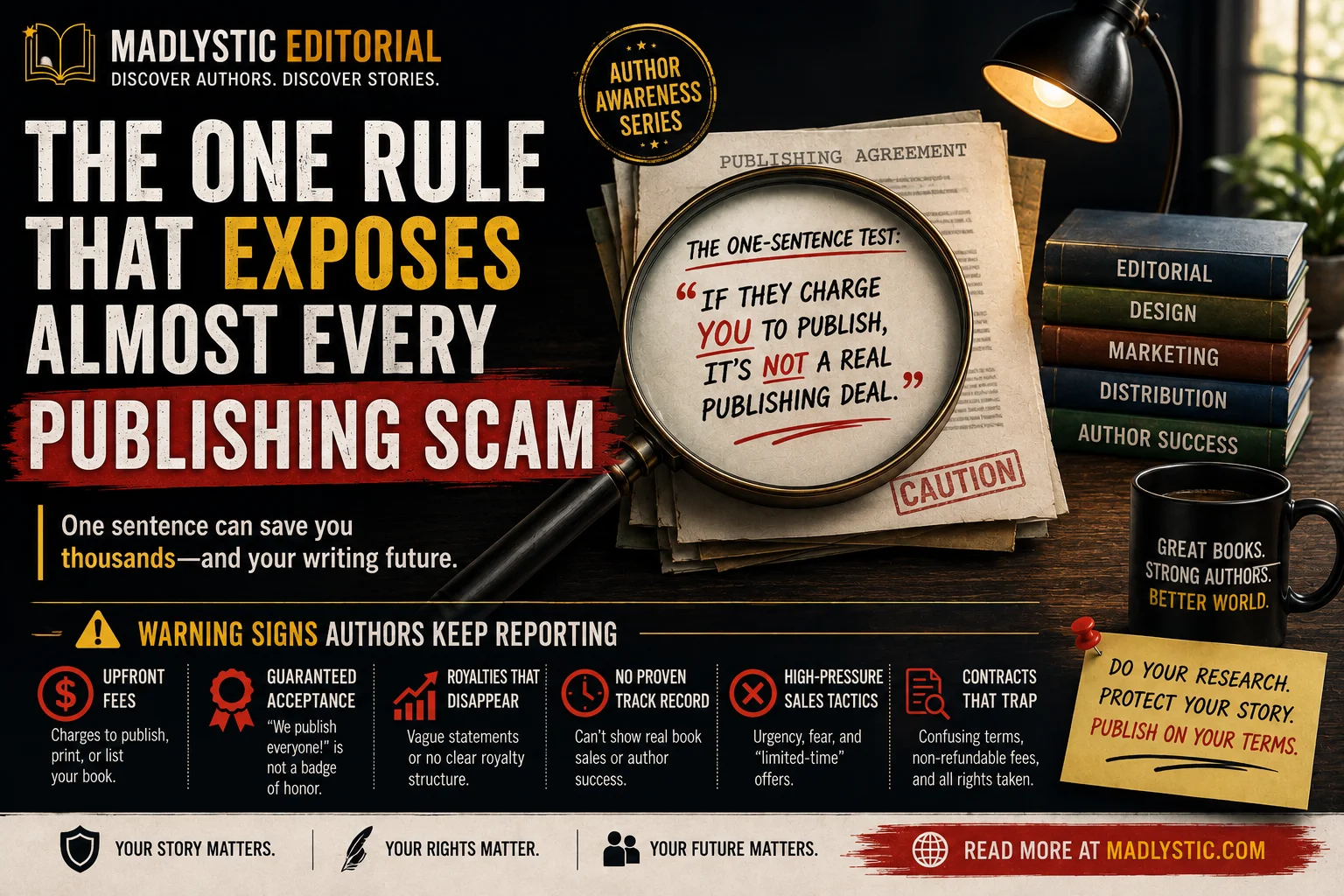
The One Rule That Exposes Almost Every Publishing Scam
August 24, 2026
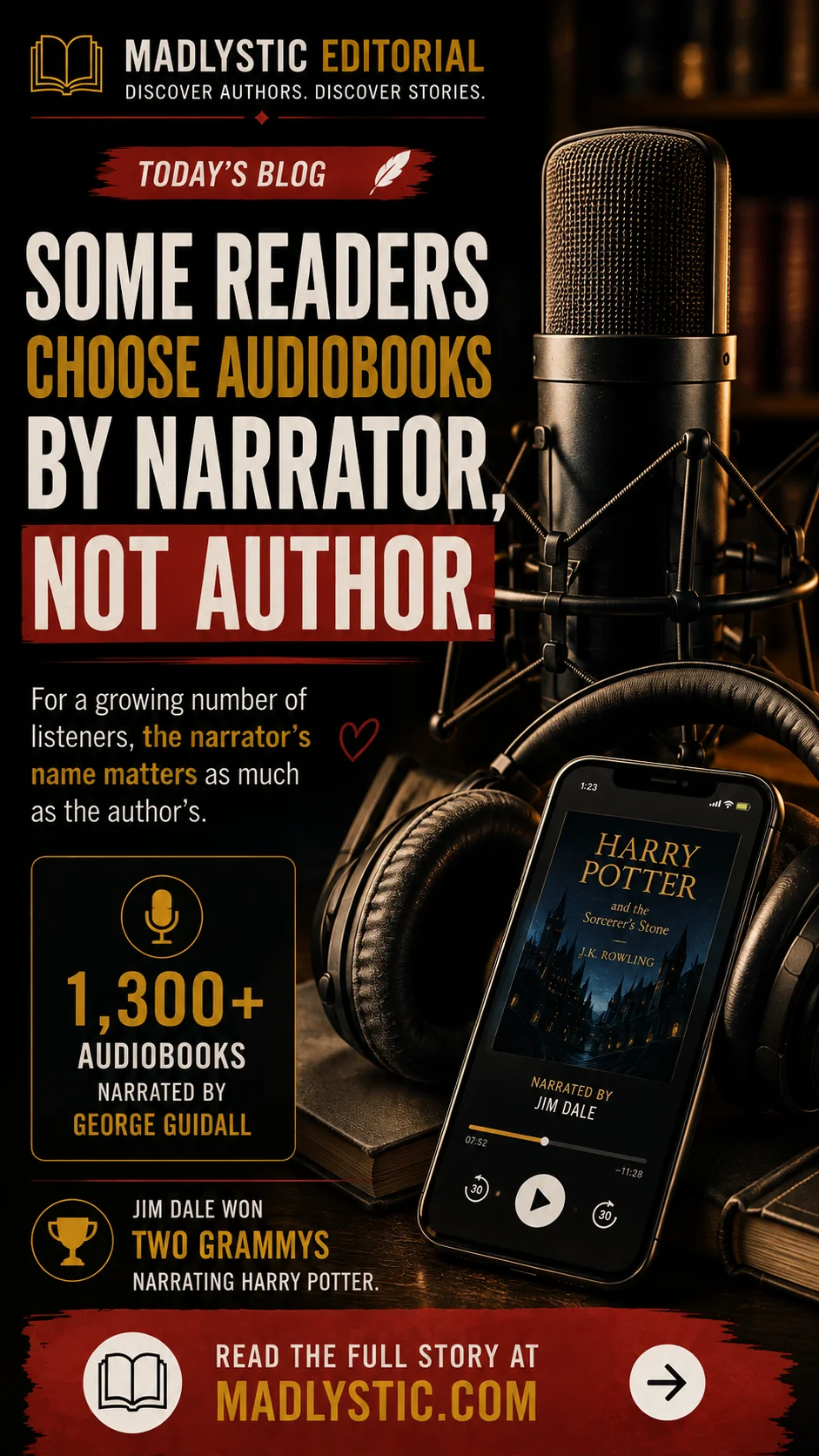
Some Readers Choose Audiobooks by Narrator, Not Author
August 8, 2026

The AI Detector That Cost a Novelist $2 Million Might Be Wrong 60% of the Time
August 7, 2026