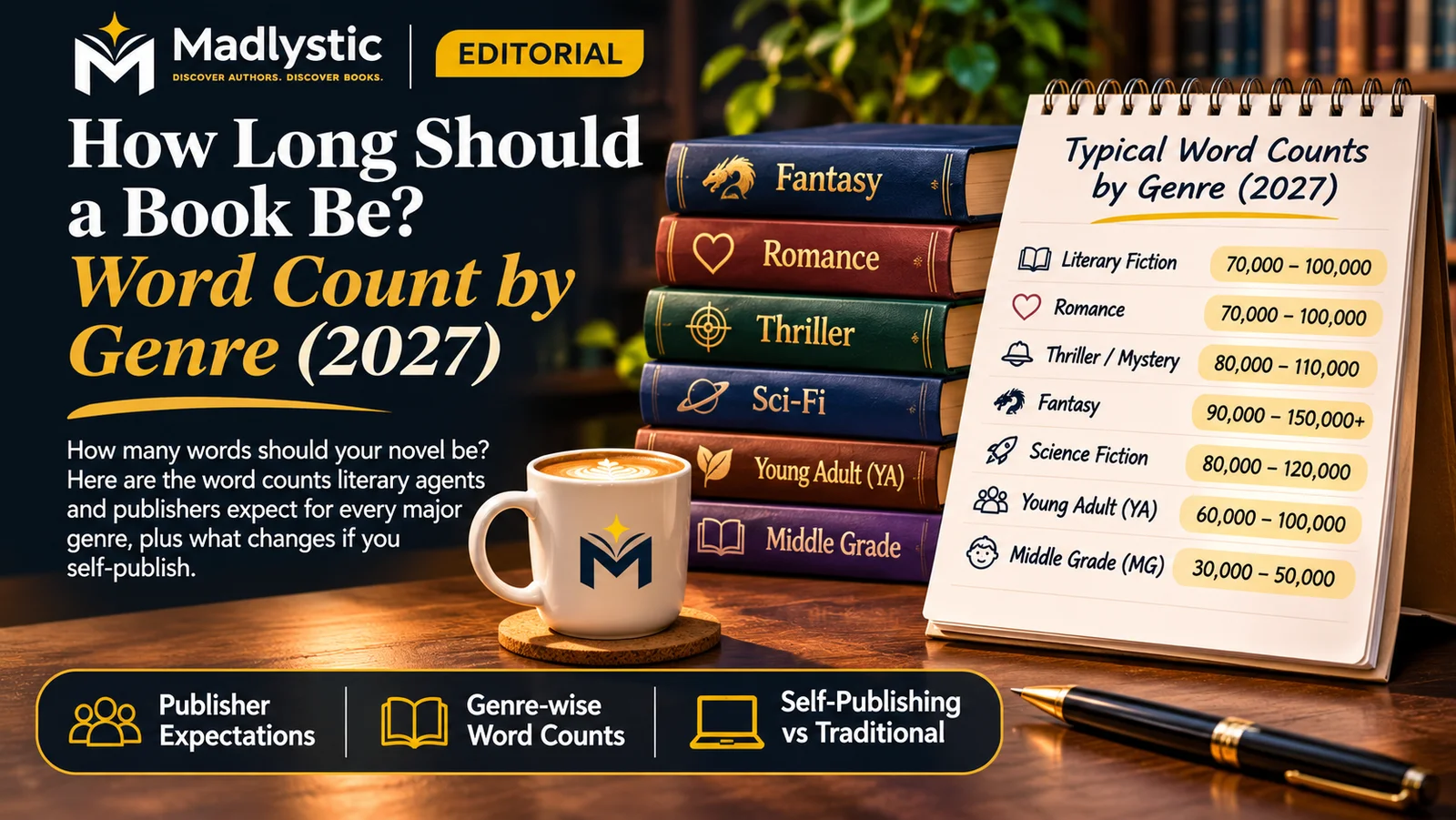
How Long Should a Book Be? Word Count by Genre (2027)
How many words should your novel be? Here are the word counts literary agents and publishers expect for every major genre, from romance and thrillers to fantasy, YA, and middle grade, plus what changes if you self-publish.
Published November 16, 2026
9 min read
Quote of the Day
"Anything in this word count won't scare off any agent anywhere." — Chuck Sambuchino, on the 80,000 to 89,999-word sweet spot for most adult novels
It's one of the first questions every writer asks: how long should my book be? The honest answer is "it depends on your genre," but that isn't very helpful on its own. Here are the actual ranges agents and publishers expect, why they exist, and when you can safely ignore them.
Word count ranges in this guide reflect widely used industry guidelines, mainly Writer's Digest's long-running guide for authors querying agents. Individual agents and publishers may differ, so always check their own submission guidelines.
The short answer
Most adult novels land between 70,000 and 100,000 words. For a debut novel aimed at literary agents, 80,000 to 89,999 words is widely considered the safest range for literary, mainstream, romance, mystery, thriller, and horror fiction.
Word count by genre
Genre Typical range Notes Literary and mainstream fiction 80,000–89,999 Outer limits around 71,000–109,000 Romance (single title) 80,000–89,999 Romance often runs 70,000–100,000 Category romance 50,000–60,000 Written to a specific publisher's line Mystery and thriller 80,000–89,999 Outer limits around 71,000–109,000 Horror 80,000–89,999 Outer limits around 71,000–109,000 Science fiction and fantasy 100,000–115,000 Epic fantasy often runs longer Western 50,000–80,000 Young adult 55,000–79,999 YA fantasy can run longer Middle grade 20,000–55,000 Upper middle grade sits at the top of the range Novella 20,000–40,000 Shorter than a full novel Standard nonfiction 50,000–80,000 Varies widely by subject
Why genre changes the number
Word count isn't arbitrary. It follows what each genre needs to work:
Fantasy and science fiction run longer because readers expect new worlds, magic systems, and larger casts, all of which take space to build.
Thrillers and mysteries stay tighter because momentum matters more than scenery. Extra pages tend to slow the tension down.
Romance balances emotion and pace, with enough space to develop the relationship without the tension going stale.
Young adult and middle grade run shorter to match younger readers and a faster pace.
The same logic shapes chapter length too, as we explain in why a thriller chapter is never as long as a fantasy chapter.
Why agents care so much about word count
For a debut author, word count is one of the first things an agent sees, often before reading a single page. A manuscript far outside the expected range signals two risks:
Too long: the book likely needs heavy cutting, and longer books cost more to print, which raises the cover price.
Too short: the story may feel underdeveloped, or simply too thin for the price readers expect to pay.
Established authors get more freedom. A debut author asking a publisher to take a financial risk usually doesn't. Learn more about how agents decide in how literary agents actually get paid.
How many pages is that?
A printed novel page holds roughly 250 to 300 words, depending on trim size, font, and how much dialogue the book has. That means:
50,000 words is around 170 to 200 pages
80,000 words is around 270 to 320 pages
100,000 words is around 330 to 400 pages
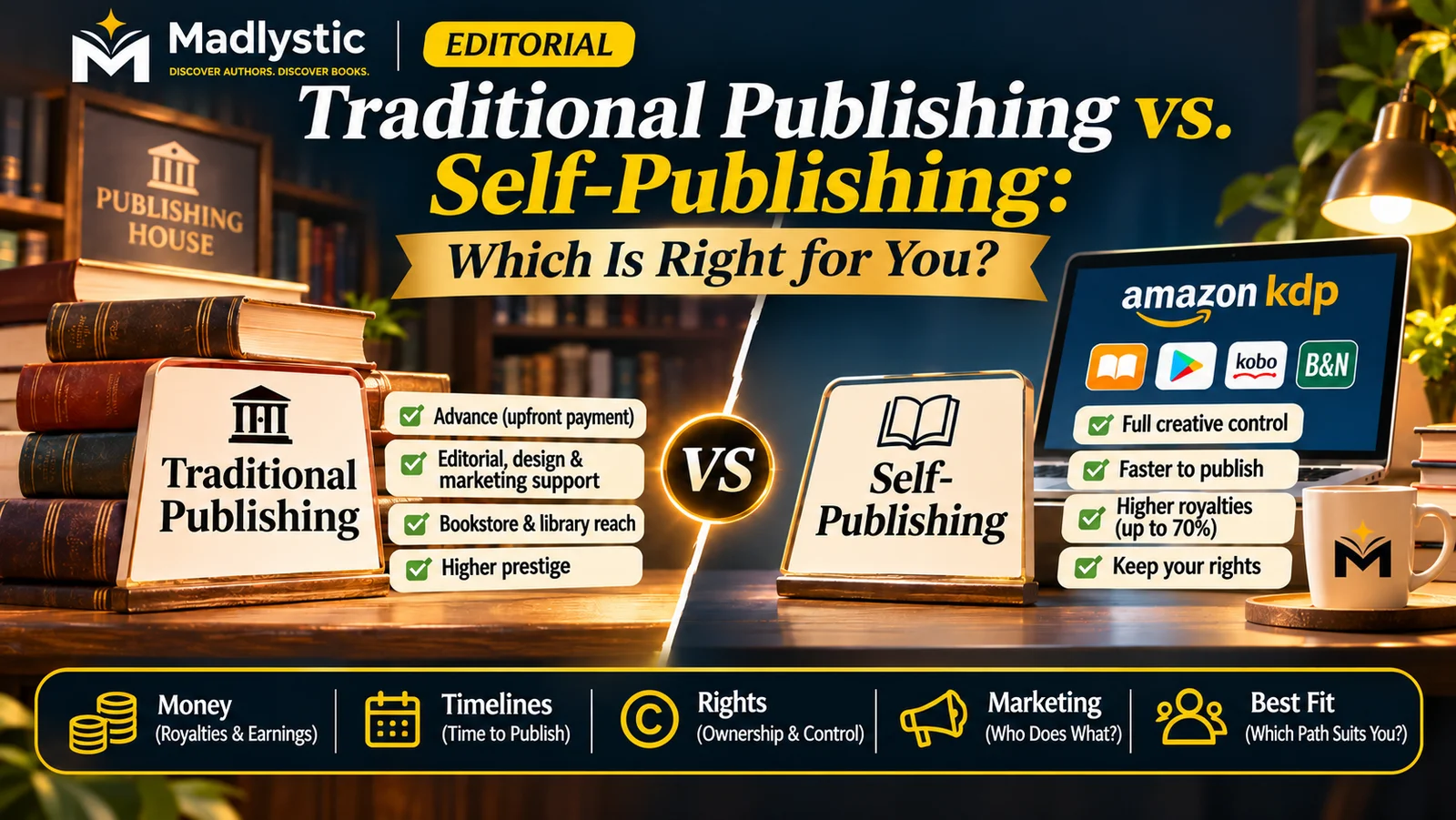
What changes if you self-publish
Self-published authors don't need to satisfy an agent, so the rules loosen, but two things still matter:
Reader expectations. Readers notice when a genre book feels too thin or too padded, and it shows up in reviews.
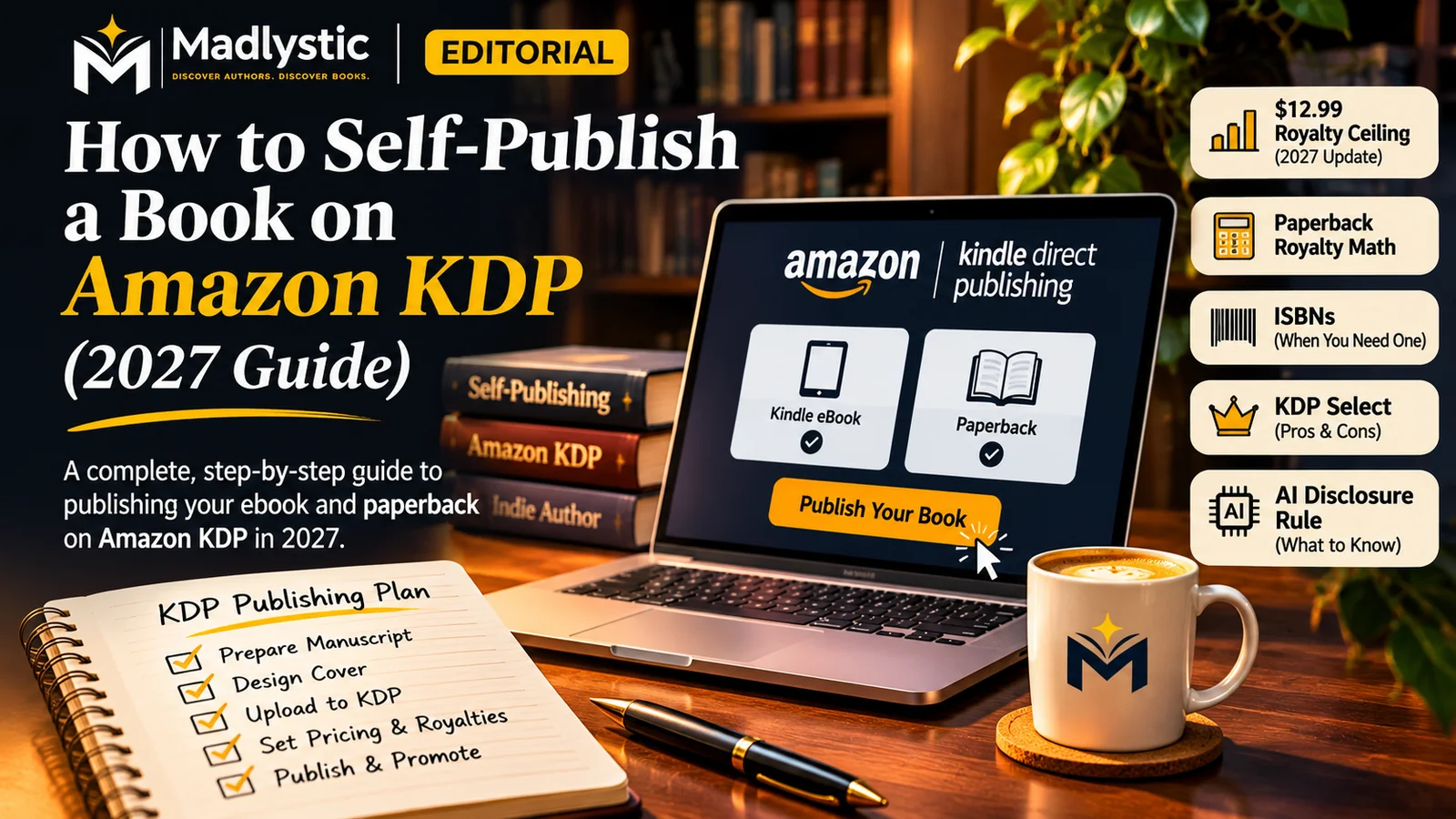
Printing costs. On Amazon KDP, longer paperbacks cost more to print, which affects your price and royalty. See our step-by-step KDP publishing guide for the paperback royalty math.
Some indie genres, especially romance and fantasy series in Kindle Unlimited, are often written and released in their own patterns. Learn why in why many Kindle Unlimited books feel surprisingly similar.
When to break the rules
These ranges are guidelines, not laws. Plenty of famous books fall well outside them. The practical test is simple: does every scene earn its place? If you're 20,000 words over, look for repeated scenes, slow openings, and subplots that don't change anything. If you're well under, check whether your characters and conflicts have room to develop. Write the book the story needs first, then edit it toward the range your readers and publishers expect.
Conclusion
There's no magic number that makes a book good, but word count is one of the clearest signals of whether a manuscript fits its genre. For most adult novels, aim for 80,000 to 90,000 words. For fantasy and science fiction, 100,000 to 115,000. For young adult and middle grade, shorter. Then let the story, and an honest edit, decide the rest.
Frequently Asked Questions
How many words is a novel?
Most adult novels are between 70,000 and 100,000 words. Anything under about 40,000 words is usually considered a novella.
What is the best word count for a debut novel?
For most adult genres, 80,000 to 89,999 words is widely considered the safest range for querying literary agents. For science fiction and fantasy, aim for 100,000 to 115,000.
How long should a fantasy novel be?
Most guidelines suggest 100,000 to 115,000 words for a debut fantasy novel. Epic fantasy often runs longer, but debut authors are usually advised to stay under about 120,000 words.
How long should a young adult novel be?
Young adult novels typically run 55,000 to 80,000 words. YA fantasy and science fiction can run longer.
Does word count matter for self-published books?
Less than for traditional publishing, but it still affects reader expectations and, for paperbacks, printing costs and royalties.
Sources: Writer's Digest's word count guidelines (via Inkfluence and ServiceScape), Jericho Writers (category romance), Nathan Bransford, Writers & Artists, Reedsy, and Kindlepreneur.
Share this article
Share this article with readers who'll want to read it.