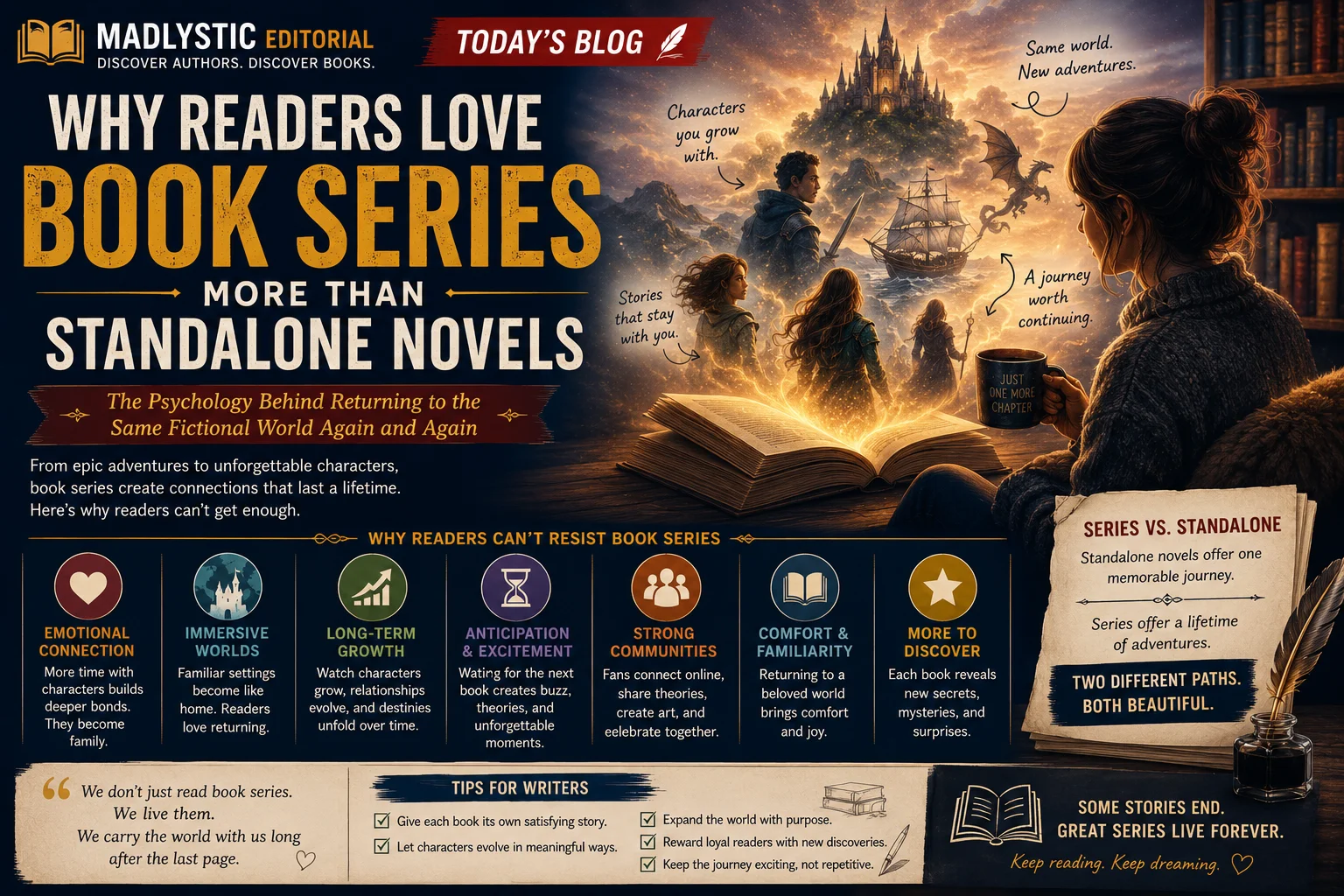
Why Readers Love Book Series More Than Standalone Novels
Why Readers Love Book Series More Than Standalone Novels | Madlystic Discover why book series captivate readers through immersive worlds, long-term character development, emotional attachment, and the psychology behind returning to beloved stories.
Published July 16, 2026
The Psychology Behind Returning to the Same Fictional World Again and Again
Published by Madlystic Editorial Team | July 16, 2026
Estimated Reading Time: 18–22 Minutes
Introduction
Ask a lifelong reader about the books that changed their life, and you'll often hear the name of a series rather than a single novel.
Readers proudly spend months—or even years—following the same characters across multiple books. They eagerly count down to each new release, discuss theories online, revisit earlier installments, and recommend the series to friends.
From epic fantasy sagas and detective mysteries to romance collections and science fiction adventures, book series have become one of publishing's most successful formats.
But why?
Why do readers willingly invest thousands of pages into one fictional universe when they could experience dozens of standalone stories instead?
The answer goes far beyond cliffhangers or clever marketing.
It lies in psychology, emotional attachment, and humanity's natural desire to belong to a world larger than ourselves.
Readers Don't Just Read Worlds—They Live in Them
A standalone novel introduces a world.
A series lets readers move in.
Over multiple books, fictional places begin to feel familiar.
Cities.
Schools.
Kingdoms.
Space stations.
Small towns.
Readers develop emotional memories connected to these settings, making each return feel like revisiting an old friend.
Characters Become Family
The longer readers spend with characters, the stronger the emotional connection becomes.
Instead of meeting someone for one adventure, readers witness years of growth.
They celebrate victories.
Mourn losses.
Watch relationships evolve.
Characters become companions rather than simply protagonists.
This emotional investment keeps readers returning for the next installment.
Anticipation Creates Excitement
Waiting for the next book creates its own experience.
Readers speculate about:
Future romances
Hidden villains
Character deaths
Unanswered mysteries
New locations
Plot twists
Communities form around these discussions, turning reading into a shared cultural event.
World-Building Has Room to Breathe
Standalone novels often have limited space.
Series allow authors to gradually expand their universes.
Each installment can reveal:
New cultures
Forgotten history
Ancient myths
Political conflicts
Hidden secrets
The fictional world grows naturally alongside the story.
Readers Enjoy Watching Growth
One of the greatest strengths of a series is long-term character development.
A timid child can become a confident leader.
A rival can become a trusted friend.
A villain can seek redemption.
These transformations feel more authentic because readers witness every step.
Familiarity Creates Comfort
Psychologists have long observed the mere exposure effect—the tendency for people to develop a preference for things they encounter repeatedly.
Book series benefit from this effect.
Returning to familiar characters and settings often feels comforting, especially during stressful times.
Readers know they're entering a world they already understand.
Cliffhangers Keep Conversations Alive
Not every book in a series ends with complete closure.
Strategic cliffhangers encourage discussion and anticipation.
Readers exchange theories, analyze clues, and imagine possible endings long before the next installment arrives.
Book Series Build Communities
Popular series often inspire:
Fan art
Reading clubs
Online forums
Cosplay
Podcasts
Social media discussions
Readers become part of something bigger than the books themselves.
Why Publishers Love Series
From a publishing perspective, successful series create loyal audiences.
A reader who enjoys Book One is more likely to purchase Book Two—and often the entire collection.
Series also strengthen author branding and long-term discoverability.
Can Standalone Novels Still Win?
Absolutely.
Standalone novels offer complete, satisfying stories in a single volume and remain essential to literature.
The choice isn't about one format being better.
It's about different reading experiences.
Some stories deserve one unforgettable ending.
Others deserve an entire journey.
Advice for Writers
If you're planning a series:
Ensure every book tells a satisfying story.
Let characters evolve naturally.
Expand the world with purpose.
Avoid repeating the same conflicts.
Reward loyal readers with meaningful growth and new discoveries.
A successful series should feel like a continuous adventure—not the same book repeated.
Final Thoughts
Book series succeed because they offer something standalone novels rarely can: time.
Time to grow.
Time to explore.
Time to build unforgettable relationships.
Readers don't simply finish a great series—they leave behind a world that has become part of their imagination.
That emotional connection is why so many readers eagerly await the next installment, recommend entire sagas to friends, and revisit beloved series years later.
Some stories end when the final page is turned.
A great series continues living in the reader's mind long after the last book is closed.
Key Takeaways
📚 Series create deeper emotional connections.
🌍 Expansive worlds keep readers engaged.
❤️ Long-term character growth builds loyalty.
🧠 Familiar settings provide comfort and nostalgia.
💬 Cliffhangers and theories foster active communities.
📖 Series encourage repeat reading and long-term engagement.
✨ Readers often return not just for the story—but for the world they love.
Short Description
Why do readers love book series so much? Explore the psychology behind emotional attachment, immersive world-building, unforgettable characters, and why readers keep coming back for the next installment.
Share this article
Share this article with readers who'll want to read it.